Running a dialysis center involves much more than providing treatment during scheduled appointments. Behind every patient visit, there are records to maintain, treatment schedules to organize, billing details to manage, staff responsibilities to coordinate, and important information that needs to remain accessible. When these activities are handled through disconnected registers, spreadsheets, or manual processes, even routine administrative work can become difficult to manage.
This is where Dialysis Center Management Software in Dehradun becomes a relevant technology consideration for modern healthcare facilities. A well-planned digital management system can help dialysis centers organize essential administrative information, coordinate appointments, maintain patient records, and manage everyday operational activities through a more structured process.
For hospitals, independent dialysis facilities, nephrology clinics, and healthcare organizations in Dehradun, digital management is not simply about replacing paperwork with screens. It is about creating a more organized working environment where information can be managed systematically and administrative responsibilities become easier to coordinate.
The important question is not whether every healthcare activity needs software, but whether the right digital solution can address the operational challenges a dialysis center experiences every day.
What Is Dialysis Center Management Software and How Does It Work?
Dialysis Center Management Software is a digital solution designed to help organize the administrative and operational activities associated with dialysis facilities.
A dialysis center regularly handles information related to patients, appointments, treatment schedules, billing, staff coordination, and service records. Managing these details separately can make information difficult to track, particularly when patient visits are recurring.
A digital management platform can bring relevant administrative information into a more organized environment, depending on the features available in the selected solution.
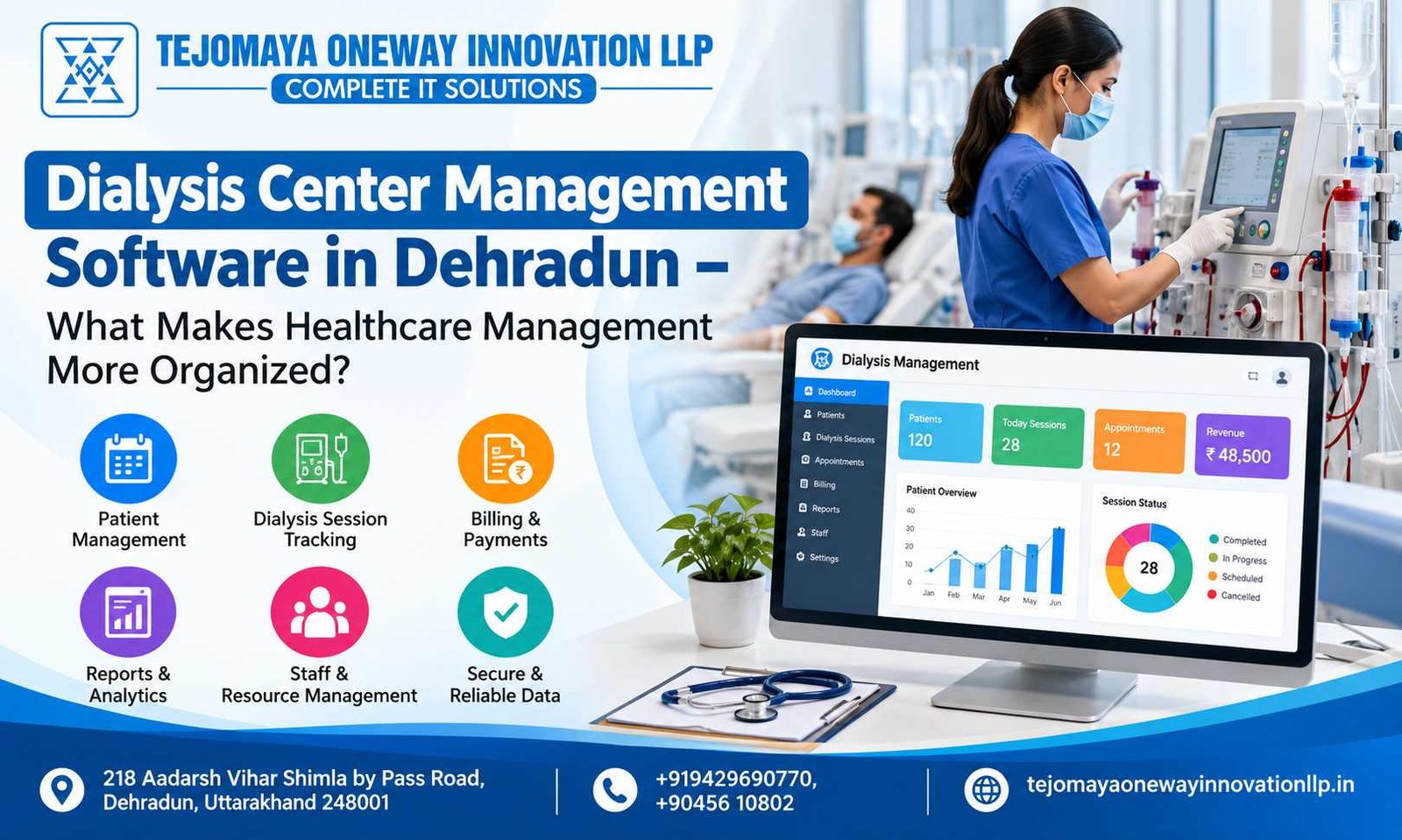
Common areas of management may include:
- Patient registration and information management
- Appointment scheduling and visit coordination
- Dialysis session planning
- Administrative record maintenance
- Billing and payment documentation
- Staff and operational coordination
- Reports and management summaries
- Patient communication records
The purpose is to make routine administrative information easier to organize and retrieve. Clinical decisions and treatment protocols must continue to remain under the responsibility of qualified healthcare professionals.
Why Are Dialysis Centers in Dehradun Exploring Digital Management Solutions?
Healthcare facilities work in an environment where accuracy, coordination, and timely access to information matter. Dialysis centers have additional scheduling and record-management requirements because many patients follow recurring treatment schedules.
When information is spread across multiple registers, files, and individual systems, staff members may spend additional time locating records or checking appointment details.
A structured Dialysis Management Software in Dehradun solution may help address several everyday administrative challenges.
Managing Recurring Patient Appointments
Dialysis patients may require regularly scheduled visits. Maintaining these appointments manually can become challenging when multiple patients have different schedules.
Digital appointment management can help staff organize upcoming visits and maintain a clearer view of the center’s schedule.
Keeping Patient Information Organized
Patient information needs to be maintained systematically. Digital record management can make relevant administrative details easier to access, update, and organize according to appropriate access permissions.
Coordinating Daily Activities
Reception teams, administrative staff, and healthcare professionals have different responsibilities. A shared and organized information system may help improve coordination between these working areas.
Maintaining Billing Records
Dialysis centers also handle billing, payment entries, and service-related financial documentation. Organized billing records can make administrative tracking more manageable.
Reducing Dependence on Paperwork
Manual documentation may require considerable effort when records need to be searched, updated, or reviewed. Digital systems can offer a more structured alternative for managing suitable administrative information.
Which Features Should a Dialysis Center Management System Include?
Choosing software should begin with understanding the actual requirements of the healthcare facility. A small dialysis clinic may have different priorities from a hospital managing several departments.
Here are some important capabilities worth evaluating.
1. Patient Information Management
A patient management module can help organize registration details, contact information, visit history, and other relevant administrative records.
The ability to retrieve information efficiently can make routine administrative tasks more manageable.
2. Appointment and Treatment Scheduling
Scheduling functionality can help organize patient visits and planned dialysis sessions. It may also provide staff with a clearer overview of upcoming appointments and scheduling requirements.
3. Digital Patient Record Management
A structured Dialysis Patient Management Software solution may help maintain patient-related administrative information in a centralized digital environment.
Healthcare organizations should evaluate how records are stored, updated, accessed, and protected.
4. Billing and Payment Management
Billing functionality can support the organization of invoices, payment entries, and administrative financial records.
This can be particularly useful for facilities that handle multiple patients and recurring service transactions.
5. Reports and Administrative Insights
Reports can help administrators review operational information, appointment activity, billing records, and other available management data.
The usefulness of reporting depends on the quality of information entered into the system.
6. Staff Access and User Management
Not every employee requires access to every record. Role-based permissions can help organizations manage who can view or update different categories of information.
7. Data Security and Backup
Healthcare information requires careful protection. Before selecting a system, organizations should examine data security arrangements, backup procedures, access controls, and applicable privacy requirements.
How Can Dialysis Patient Management Software Improve Daily Coordination?
A dialysis center’s daily operations involve several connected activities. Patient registration, appointment confirmation, administrative documentation, billing, and treatment coordination all contribute to the working process.
When these activities are managed through a suitable digital system, staff may find it easier to maintain consistent administrative information.
For example, consider a dialysis facility managing multiple recurring appointments throughout the week. Without an organized scheduling process, staff may need to check different registers or communicate repeatedly to confirm appointment details.
A digital scheduling system can provide a more structured overview of planned visits, subject to its available features.
Similarly, maintaining patient information electronically may help authorized staff retrieve relevant administrative records without searching through several physical files.
However, software should be selected according to real operational needs. Technology can support administrative coordination, but it does not replace medical expertise, professional judgment, or clinical supervision.
Different Healthcare Facilities That Can Benefit From Dialysis Management Software
Digital management requirements are not identical across all healthcare organizations. Different facilities may use software according to their size, patient volume, and administrative structure.
Independent Dialysis Centers
Independent facilities can explore digital systems for managing patient registration, recurring appointments, billing documentation, and routine administrative information.
Multispecialty Hospitals
Hospitals with dialysis departments may need software that fits within their wider administrative and information-management environment.
Nephrology Clinics
Nephrology clinics can consider digital solutions for organizing relevant patient information, appointments, and administrative workflows.
Healthcare Networks
Organizations operating multiple healthcare facilities may evaluate systems that support consistent administrative processes across different locations.
Newly Established Dialysis Facilities
New centers can assess their software requirements during the planning stage rather than waiting until manual record management becomes difficult.
How to Choose the Right Dialysis Center Management Software in Dehradun
Selecting software is an important operational decision. A solution that looks impressive during a demonstration may not necessarily fit the daily working requirements of a healthcare facility.
Before choosing Dialysis Center Management Software in Dehradun, administrators should consider the following factors.
Understand Your Requirements: Identify the activities that need digital support, such as appointments, patient records, billing, reporting, and administrative coordination.
Check Ease of Use: Staff members should be able to understand the system without unnecessary complexity. A simple and practical interface can make adoption easier.
Evaluate Customization: Different dialysis centers may follow different administrative workflows. Check whether the software can accommodate relevant operational requirements.
Review Data Protection: Examine user permissions, security measures, data backup, and privacy-related practices before storing healthcare information.
Consider Future Expansion: A growing facility may need additional users, records, or administrative capabilities in the future.
Ask About Technical Support: Understand what assistance is available during implementation, staff onboarding, troubleshooting, and ongoing software use.
Check Integration Requirements: If the facility already uses hospital or accounting software, evaluate whether the proposed solution can work with the existing technology environment.
Common Digital Management Mistakes Dialysis Centers Should Avoid
Adopting software without proper planning can create new challenges instead of solving existing ones.
Some common mistakes include:
Choosing Software Without Identifying Actual Needs
A facility may end up paying for features it rarely uses while overlooking essential administrative requirements.
Ignoring Staff Training
Even a capable system can become difficult to use when employees do not understand its functions and working procedures.
Maintaining Incomplete Digital Records
Software is only as useful as the information entered into it. Incorrect or incomplete records can affect the reliability of administrative reporting.
Overlooking Data Security
Healthcare organizations should not compromise on access controls, data protection, backup arrangements, or applicable privacy obligations.
Expecting Software to Replace Clinical Professionals
Management software supports administrative processes. Medical assessments, dialysis prescriptions, treatment decisions, and clinical monitoring must remain with qualified professionals.
Failing to Review the System Regularly
Operational requirements can change as a facility grows. Periodic reviews help organizations understand whether their software continues to meet their needs.
How Tejomaya Oneway Innovation LLP Connects Technology With Healthcare Management Needs
Tejomaya Oneway Innovation LLP is a technology company based in Dehradun, Uttarakhand, working in the software and digital solutions space.
For healthcare organizations exploring Dialysis Center Management Software in Dehradun, understanding the operational requirement should be the starting point of any technology discussion.
A dialysis center may need better organization of patient-related information, appointment workflows, billing documentation, administrative reporting, or other digital processes. The appropriate software approach depends on the facility’s working structure and technical requirements.
Tejomaya Oneway Innovation LLP can be approached to discuss software-related requirements and explore suitable technology solutions based on the organization’s needs.
For healthcare administrators, the important consideration is finding a solution that supports practical daily activities rather than introducing unnecessary complexity.
The right technology conversation should begin with questions about existing workflows, information management, usability, security, and future requirements.

Practical Ways Dialysis Centers Can Prepare for Digital Transformation
Moving from manual processes to digital management does not have to begin with a complicated technology overhaul.
Healthcare facilities can approach the process step by step.
- Review Existing Records: Understand how patient-related administrative information is currently maintained.
- Identify Repetitive Tasks: Find activities that require repeated manual entry or unnecessary coordination.
- Organize Scheduling Requirements: Document how recurring appointments and planned sessions are managed.
- Define Access Responsibilities: Determine which staff members need access to different information categories.
- Evaluate Software Options: Compare available systems according to practical requirements.
- Train Relevant Staff: Prepare employees to use the selected platform correctly.
- Review Performance: Periodically assess usability, record accuracy, and administrative efficiency.
A planned transition can help employees adapt more comfortably while allowing the organization to evaluate whether the selected software is delivering the expected administrative benefits.
What Should Healthcare Providers Check Before Investing in Dialysis Software?
| Evaluation Factor | Why It Matters |
| Patient information management | Helps organize essential administrative records |
| Appointment scheduling | Supports recurring visit coordination |
| Billing management | Organizes payment and invoice documentation |
| Reporting capabilities | Provides visibility into available operational information |
| User permissions | Helps manage access to sensitive information |
| Data security | Supports responsible healthcare information management |
| Ease of use | Makes everyday adoption more practical |
| Technical assistance | Helps address implementation and operational concerns |
| Scalability | Supports changing organizational requirements |
Frequently Asked Questions
What is Dialysis Center Management Software in Dehradun?
Dialysis Center Management Software in Dehradun refers to digital solutions that help dialysis facilities organize administrative activities such as patient registration, appointment scheduling, billing records, and operational information.
How does dialysis management software help a healthcare facility?
It can help organize administrative records, manage recurring appointments, maintain billing information, and make relevant operational data easier for authorized staff to access.
Which features are important in dialysis patient management software?
Important features to evaluate include patient information management, appointment scheduling, digital records, billing, reporting, user permissions, data security, and backup arrangements.
Can dialysis software manage recurring patient appointments?
Yes, appointment scheduling is a common capability in healthcare management systems. Depending on the selected software, it may help organize recurring visits and provide an overview of upcoming appointments.
Is dialysis center software suitable for small clinics?
Yes. Smaller dialysis facilities can also consider digital management solutions. The best option depends on their patient volume, administrative requirements, budget, and future expansion plans.
Why is digital patient record management important?
Digital record management can make administrative information easier to organize, retrieve, and update. Appropriate security measures and authorized access are essential when handling healthcare information.
What should hospitals consider before selecting dialysis management software?
Hospitals should examine software compatibility, patient information management, scheduling, billing, reporting, access controls, data security, staff training, and technical support.
Where can businesses discuss software requirements in Dehradun?
Healthcare organizations can contact technology companies such as Tejomaya Oneway Innovation LLP to discuss their software requirements and explore suitable digital solutions.
Final Thoughts
Managing a dialysis center requires consistency, careful coordination, and organized information. From recurring patient appointments to billing documentation and administrative records, every activity contributes to the facility’s overall working process.
Manual systems may be sufficient for certain smaller operations, but as responsibilities and information requirements increase, maintaining everything separately can become more challenging.
Dialysis Center Management Software in Dehradun offers healthcare organizations an opportunity to explore more structured ways of managing administrative activities. The value of such technology depends on selecting appropriate features, maintaining accurate records, protecting sensitive information, and preparing staff to use the system effectively.
For organizations considering digital healthcare solutions, Tejomaya Oneway Innovation LLP can be a point of contact for discussing software requirements and exploring technology-related possibilities.
Ultimately, better digital management is not about making healthcare unnecessarily complicated. It is about making essential administrative processes more organized, accessible, and manageable so healthcare professionals can remain focused on their responsibilities.
